Latest posts
-
What Stock Price Do You Need to Break Even After Fees?
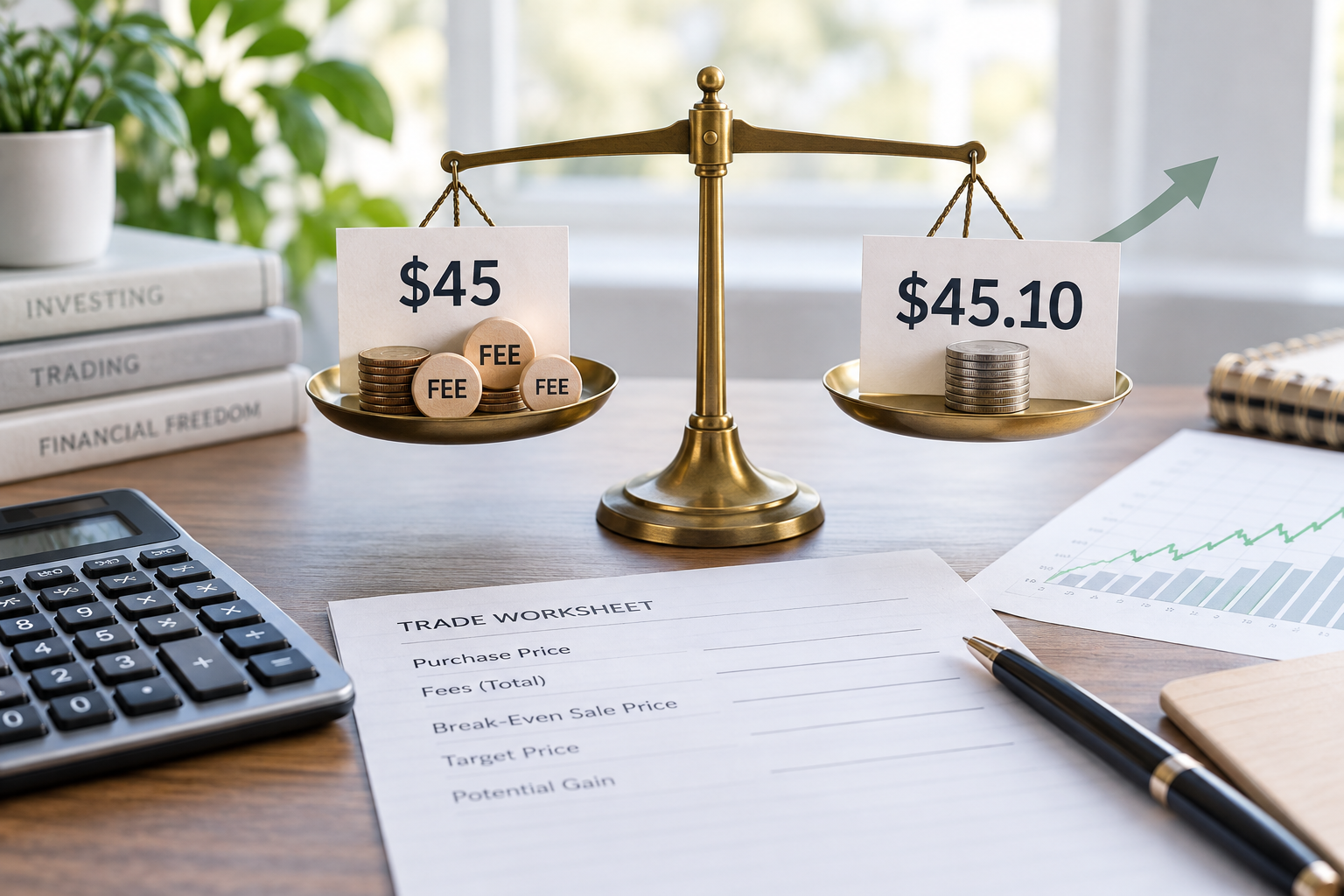
By Sang Lee — Founder and Editor of AssetCalculus Quick answer: If you buy 100 shares at $45, pay a $5 buy fee, and expect a $5 sell fee, the break-even sale price is $45.10 per share. Selling at the original $45 purchase price would still leave a $10 loss. Break-even price matters whenever commissions,…
-
What Annual Return Doubles $10,000 in 10 Years?
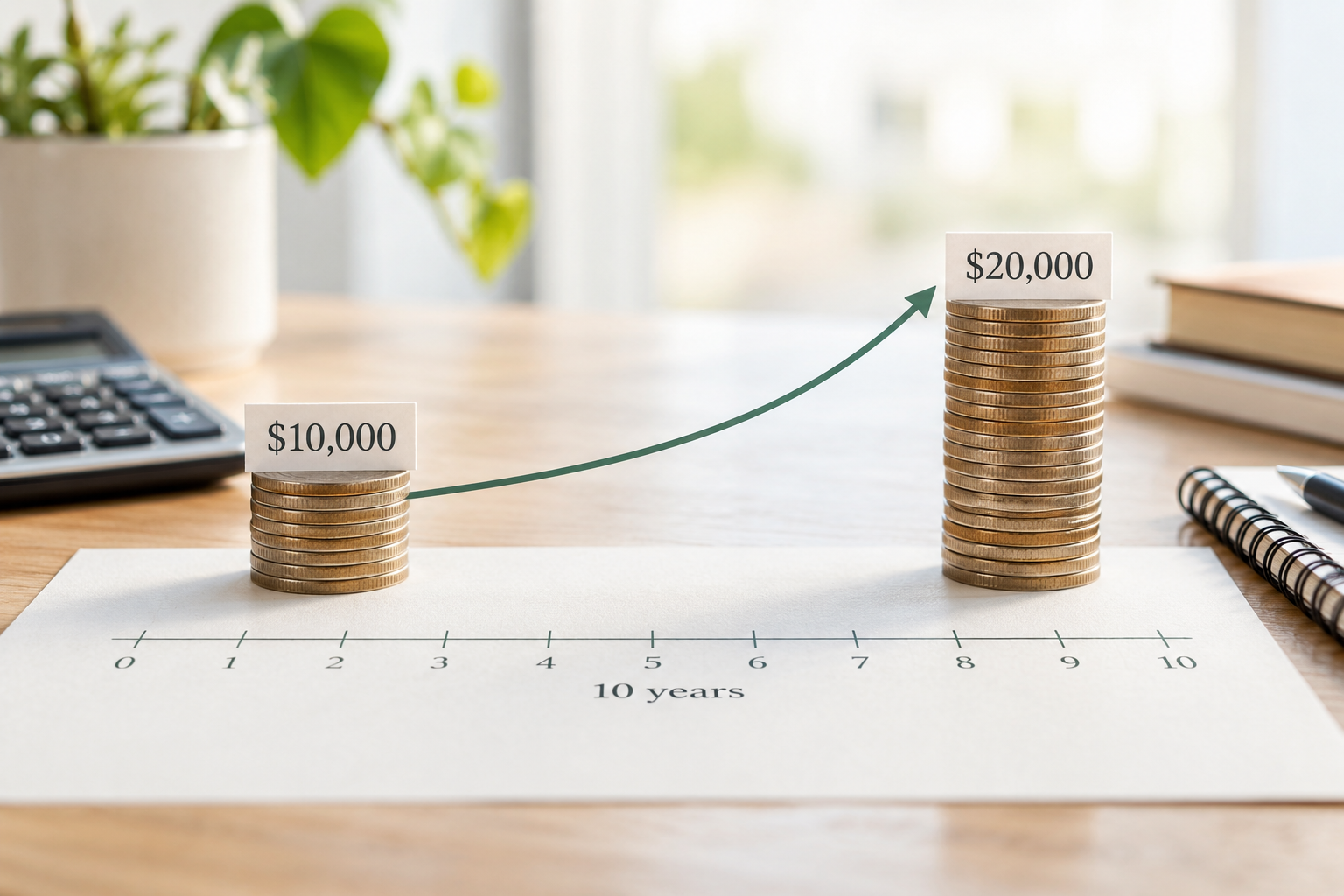
By Sang Lee — Founder and Editor of AssetCalculus Quick answer: To turn $10,000 into $20,000 in exactly 10 years with no deposits or withdrawals, you need a compound annual growth rate of approximately 7.18% before taxes and fees. The answer is not 10%. Doubling is a compounding problem: each year’s growth earns additional growth…
-
How Much Does a 0.75% ETF Fee Cost on $10,000?
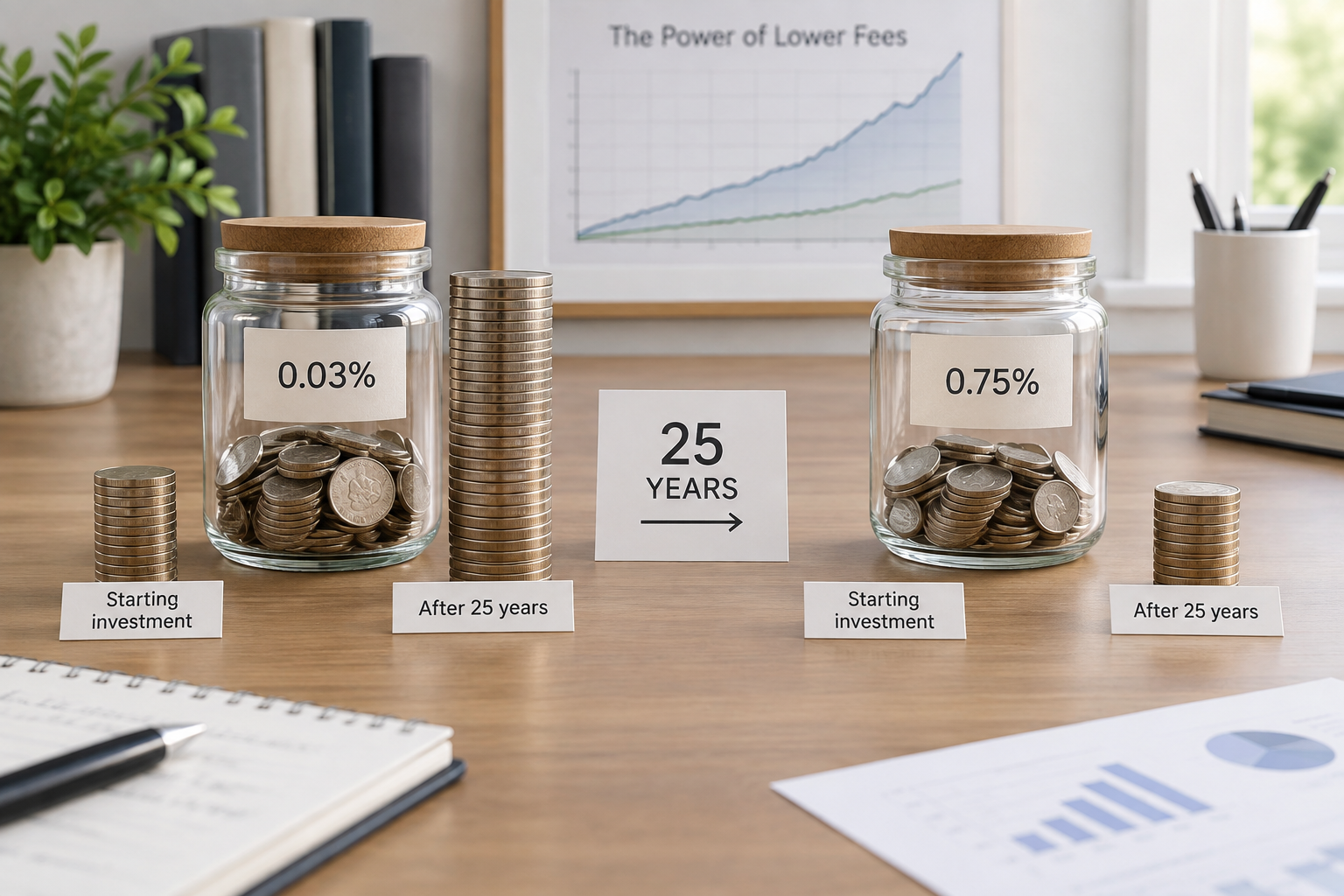
By Sang Lee — Founder and Editor of AssetCalculus Quick answer: If two comparable funds both earn 7% before fees, a $10,000 investment held for 25 years grows to about $53,895.18 with a 0.03% expense ratio and $45,522.22 with a 0.75% expense ratio. The difference is approximately $8,372.95. A 0.72-percentage-point fee gap looks small in…
-
What Happens If You Invest $300 a Month for 10 Years?

By Sang Lee — Founder and Editor of AssetCalculus Quick answer: Investing $300 at the end of every month for 10 years contributes $36,000. With a constant 7% annual return compounded monthly, the projected balance is about $51,925.44—$36,000 from contributions and $15,925.44 from growth. The actual result can be higher or lower because market returns…
-
Should I Pay Off a 6% Loan or Keep Money in a 4.25% Savings Account?
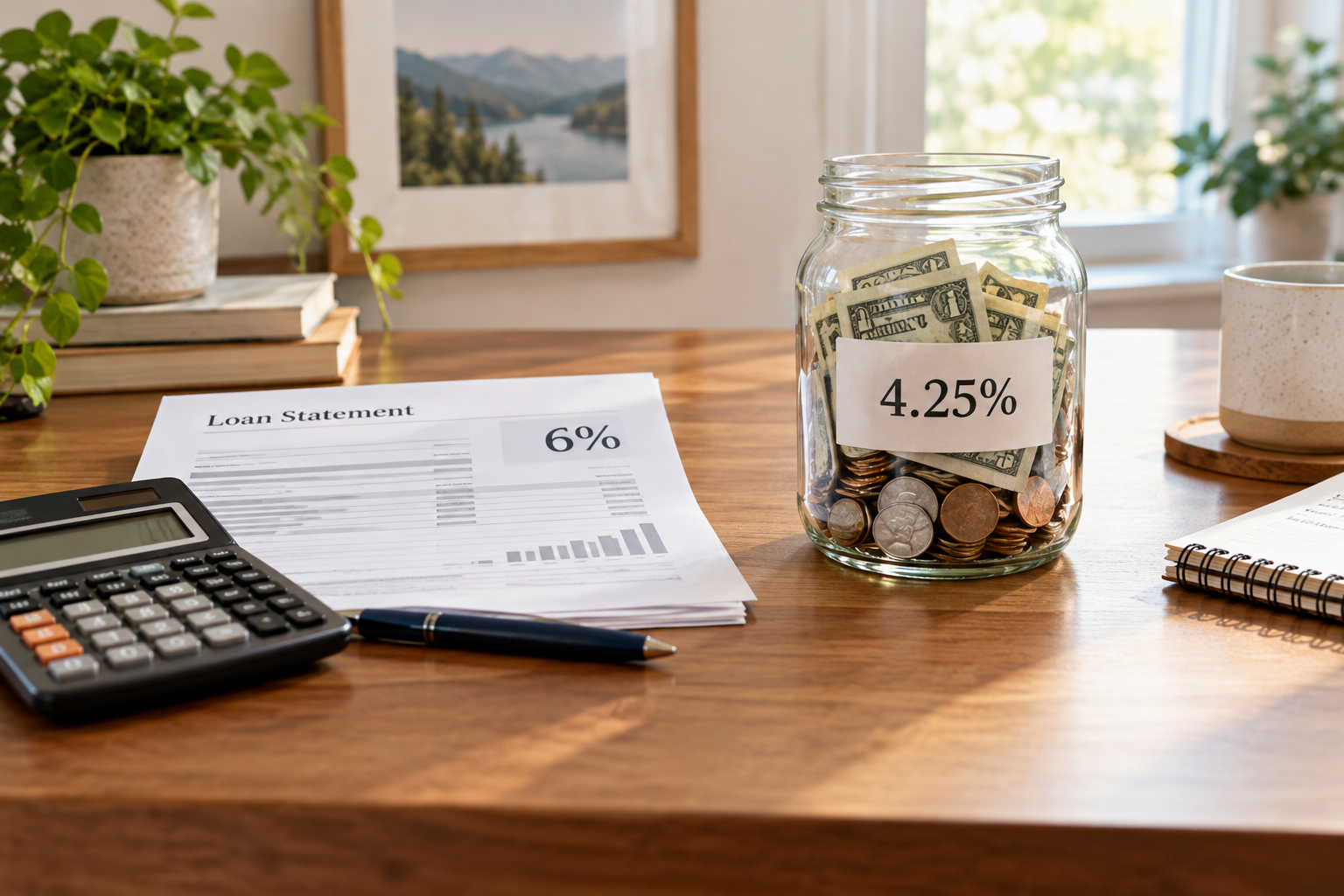
By Sang Lee — Founder and Editor of AssetCalculus Quick answer: If you already have an adequate emergency fund and the loan has no prepayment penalty, paying down a 6% nondeductible loan generally produces a stronger guaranteed mathematical benefit than keeping the same money in a savings account paying 4.25% APY. On $10,000, the first-year…
-
CD Ladder vs. Single CD: Which Strategy Is Better?

A CD ladder divides money among certificates of deposit with different maturity dates, while a single CD puts the full amount into one term. A ladder can provide more frequent access and reduce the risk of locking every dollar at one rate. A single CD is simpler and may earn more if its rate is…
-
4.25% APY vs. 4.00% APY: How Much More Does $10,000 Earn?
By Sang Lee — Founder and Editor of AssetCalculus Quick answer: On a constant $10,000 balance held for one year, a 4.25% APY earns about $425, while a 4.00% APY earns about $400. The difference is $25 before taxes. A quarter of a percentage point sounds small. On $10,000 for one year, it is small.…
-
What Is a Basis Point? How 25 BPS Changes Interest Rates

A basis point is one one-hundredth of a percentage point. One basis point equals 0.01%, 25 basis points equal 0.25%, and 100 basis points equal 1.00%. Financial institutions use basis points because they make small changes in interest rates easier to describe without ambiguity. A move from 4.00% to 4.25% is an increase of 25…
-
How Much Interest Does $10,000 Earn in a Year?
Quick answer: $10,000 earns $100 in one year at 1%, $300 at 3%, and $500 at 5% using simple annual interest. With monthly or daily compounding, the result can be slightly higher. The exact amount depends on APY, how long the money stays deposited, fees, withdrawals, and taxes. This guide uses clear dollar examples so…
-
APR vs. APY: What’s the Difference?
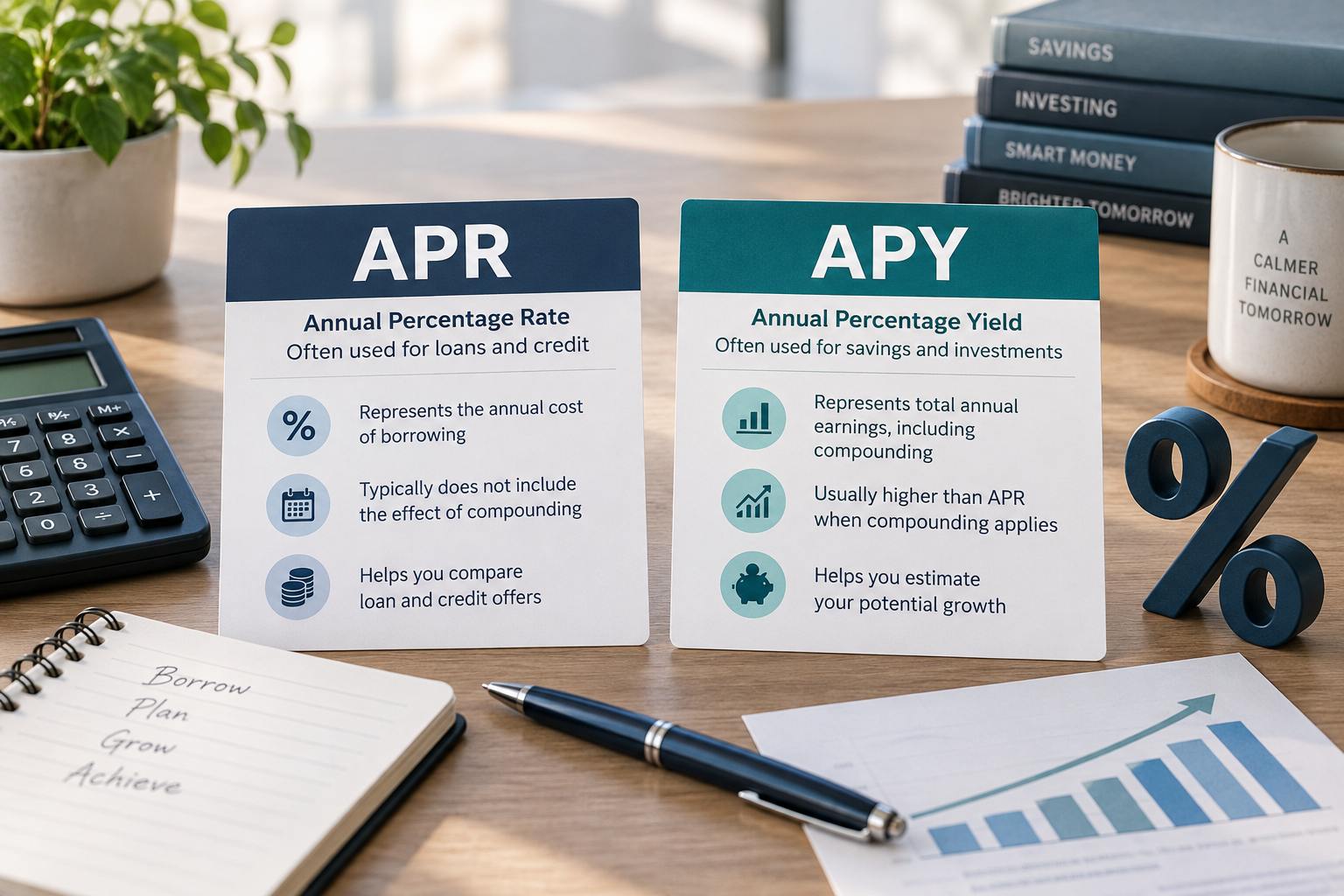
APR and APY both express an annual percentage, but they answer different questions. APR commonly describes the annual cost of borrowing, while APY describes what savings can earn after compounding is included. Understanding the difference helps you compare loans, credit cards, savings accounts, and certificates of deposit more accurately. The shortest version is: APR focuses…
Try Our Calculators
Turn the ideas in these articles into your own numbers with AssetCalculus’s free tools.
- Compound Interest Calculator — estimate how savings or investments can grow over time.
- Inflation-Adjusted Return Calculator — see what a return is worth after inflation.
- ETF Expense Ratio Impact Calculator — compare how fund fees affect long-term results.