Latest posts
-
Simple Interest vs. Compound Interest: What’s the Difference?

By Sang Lee — Founder and Editor of AssetCalculus | Published by AssetCalculus Quick answer: Simple interest is calculated only on the original principal. Compound interest is calculated on the principal plus previously earned interest. Over a short period the difference may be small, but over many years compounding can create a much larger ending…
-
Nominal Return vs. Real Return: How Inflation Changes Your Investment Gain

By Sang Lee — Founder and Editor of AssetCalculus | Published by AssetCalculus Quick answer: Nominal return is the percentage gain you see before adjusting for inflation. Real return estimates how much your purchasing power actually increased after inflation. If an investment earns 7% while prices rise 3%, the simple approximation is a 4% real…
-
Dividend Yield vs. Dividend Payout Ratio: What’s the Difference?
Both numbers come from the same dividend — one tells you what you’re being paid right now, the other tells you how much of the company’s profit that payment is actually using. By Sang Lee — Founder and Editor of AssetCalculus | Published by AssetCalculus Dividend yield and dividend payout ratio are both calculated from…
-
What Is an Expense Ratio?
Reviewed by Sang Lee | Published by AssetCalculus An expense ratio is the annual fee a mutual fund or ETF charges to cover its operating costs, expressed as a percentage of your investment in the fund. You never receive a separate invoice for it — the fund deducts it gradually from the fund’s assets throughout…
-
ETF vs. Mutual Fund: Which Is Right for You?
Both pool your money with other investors into a basket of stocks, bonds, or other assets — the differences are in how you buy them, what they cost, and how they’re taxed. By Sang Lee — Founder and Editor of AssetCalculus | Published by AssetCalculus An ETF (exchange-traded fund) and a mutual fund can hold…
-
What Is DRIP (Dividend Reinvestment)?
Reviewed by Sang Lee | Published by AssetCalculus DRIP stands for dividend reinvestment plan — an arrangement where your cash dividends are automatically used to buy more shares (including fractional shares) of the same stock or ETF, instead of being paid out to you as cash. You can set this up through certain company-sponsored plans…
-
Jackson Hole 2026: What Investors Should Know
Markets expected a dovish debut. Instead, new Fed Chair Kevin Warsh delivered a hawkish warning on inflation. Here’s what happened at Jackson Hole 2026 — and what it means for your portfolio.
-
What Is the Federal Funds Rate and Why Does It Matter?
The federal funds rate is the single interest rate that moves global markets. Here’s what it is, how the Fed sets it, and why it matters to your portfolio.
-
America’s $40 Trillion Debt: A History, in Numbers
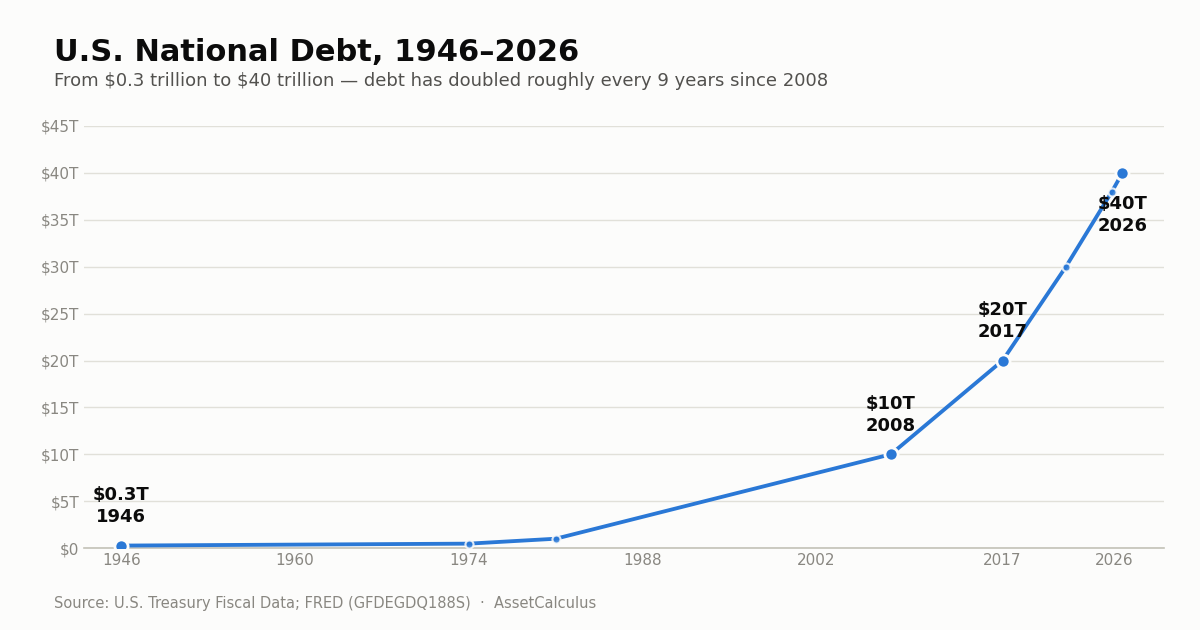
From debt-free in 1835 to $40 trillion today — what the pattern in the numbers says about where the U.S. national debt goes next.
-
Jackson Hole 2026: What Kevin Warsh’s First Speech as Fed Chair Could Mean for Your Money
Jackson Hole 2026: Kevin Warsh’s first Fed speech is Aug 28. Inflation is 3.4%, jobs are weakening. Here’s what it means.
Try Our Calculators
Turn the ideas in these articles into your own numbers with AssetCalculus’s free tools.
- Compound Interest Calculator — estimate how savings or investments can grow over time.
- Inflation-Adjusted Return Calculator — see what a return is worth after inflation.
- ETF Expense Ratio Impact Calculator — compare how fund fees affect long-term results.